Written by
Jack Palmer-White
ChurchWorks Project Director
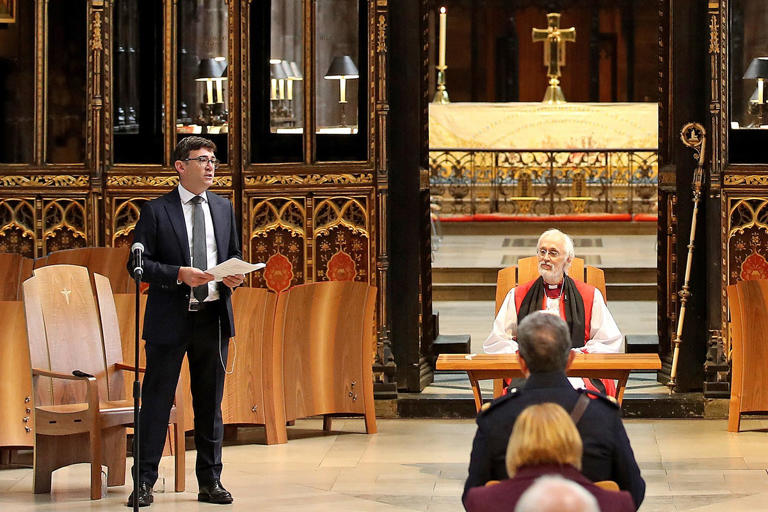
In a few short weeks, we are all expecting Andy Burnham to cross the threshold of 10 Downing Street as the new (and latest) Prime Minister. Lots has been written about Manchesterism and how his approach to devolution might reshape the State. But there has been far less focus on how having a Catholic former Mayor as PM might create new opportunities for churches and other faith communities to have a greater impact across a whole range of issues.
I remember attending hustings during the 2010 Labour Party Leadership Election, with Burnham making his case for why he was the right person to lead the party. That contest was ultimately won by Ed Miliband, and here we are in 2026 with Burnham and the Miliband brothers still at the centre of debates around the future of the Labour Party. Some things never change.
But what might change under a Burnham administration beyond who sits around the Cabinet table and the creation of ‘Number 10 in the North’? And what does it mean for how his government might work with churches and other faith communities?
During the 2024 General Election campaign, Keir Starmer said there “there will be no decade of national renewal without the active participation of the church”. We at ChurchWorks and Good Faith Partnership haven’t let him and his Ministers forget that commitment. We’ve worked to find new, strategic and practical opportunities to make that vision a reality.
Will a new Prime Minister and set of Ministers take notice? The experience of how Andy Burnham worked with churches as Mayor of Greater Manchester provides a lot of encouragement to us that churches will have the opportunity to play an even more important role in addressing the big issues facing our nation and neighbourhoods.
What has been particularly encouraging is that Burnham’s rhetoric about the importance of faith communities has been matched by genuine action at both the strategic and delivery level. Like many public servants, it seems like the role that faith communities played during the pandemic was an awakening moment. Back in 2021, he recognised that "faith can reach areas that politicians never can" in addressing the emotional, spiritual and relational recovery of communities after Covid.
But whilst some in government had short memories - despite the strong advice of Colin Bloom in his independent review of the government’s faith engagement in the aftermath of the pandemic - the Mayor of Manchester appeared to take the encouragement to heart and has since established a Faith and Belief Advisory Panel which offers the Mayor and Combined Authority input into policy on equality, community cohesion, health, inclusion and civic life. He’s also proactively brought faith expertise into different priority areas, such as
It is increasingly hard to argue that churches and faith organisations are anything but significant sources of social capital that government should actively work alongside. The challenges we face are too great for the government alone to overcome.
Whether its the church in Greater Manchester commissioned to run perinatal mental health support services, the group of churches across Lincoln running mental health drop-in cafes every night of the week, the church in East Anglia supporting children out of formal education in partnership with the local Family Hub, or the church in Hampshire co-locating its offices with the Primary Care Network to help create a more holistic and joined up approach to health and wellbeing - there are countless examples of extraordinary things happening when faith communities and the public sector work together.
There are many opportunities for the new Prime Minister to bring his positive experience of strategic and practical partnership between the state and faith communities to bear in national politics and policy. At the Theos Annual Lecture last year, he said that his vision for a renewed politics would have “trust, community, faith, belief, [and] connection at its heart”.
I hope that when he says he will put faith at the heart of politics, he really means it. At Good Faith, we’ll be doing what we can to ensure that he does.